Agentic commerce is here: who controls what the agent spends?
"Agentic commerce" used to be a slide. In 2025-2026 it became plumbing: Stripe's Agentic Commerce Protocol, Google's AP2, OpenAI's Instant Checkout, MCP tool calls that end in a purchase. The protocols solve "how an agent pays". The unsolved question is "how much you let it".
The protocol layer vs the policy layer
Protocol standards (ACP, AP2, UCP) define the wire format: how intent, mandates, and payment tokens move between buyer, agent, and merchant. They answer interoperability.
They deliberately do not answer:
- How much this agent may spend in total today.
- Which merchants or categories are off-limits.
- When a purchase needs a human's click before it happens.
- What to do when the agent retries the same charge.
That gap - between "the agent CAN pay" and "the agent SHOULD pay this" - is the policy layer. It is where SanestlyPay lives.
What the policy layer must enforce
- Budgets - per-transaction ceilings, session budgets, daily caps. The agent cannot exceed them no matter what the protocol allows.
- Categories and merchants - allowed lists, not just blocked lists: API credits and hosting yes, everything else asks first.
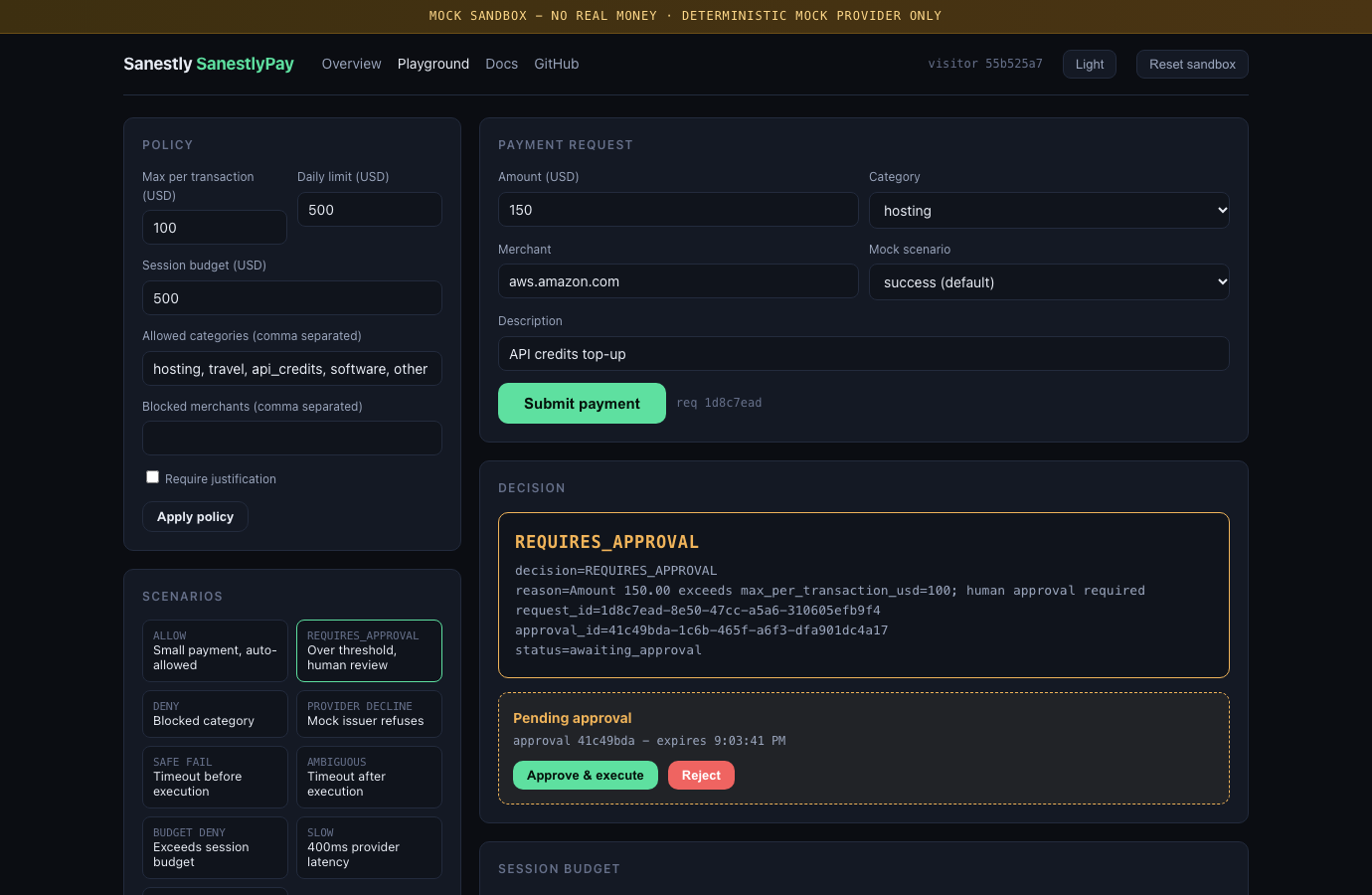
- Human approvals - purchases above a threshold or outside policy wait for a person. Approver identity is separate from the agent's key.
- Idempotent execution - a retried charge is the same charge. Agents retry; the ledger must not double.
- An audit trail with reasons - every allow/deny/approval recorded with why, not just what. When the agent does something unexpected, the trail explains it.
Where this fits with ACP/AP2
SanestlyPay is not a competing protocol - it is the control layer agents and merchants run underneath whichever commerce protocol wins. Your agent negotiates and checks out through whatever standard your stack uses; SanestlyPay decides whether the payment may proceed, under what limits, and who approved it.
Think of it as the difference between "the agent has a credit card" and "the agent has a company card with a policy".
Try the model
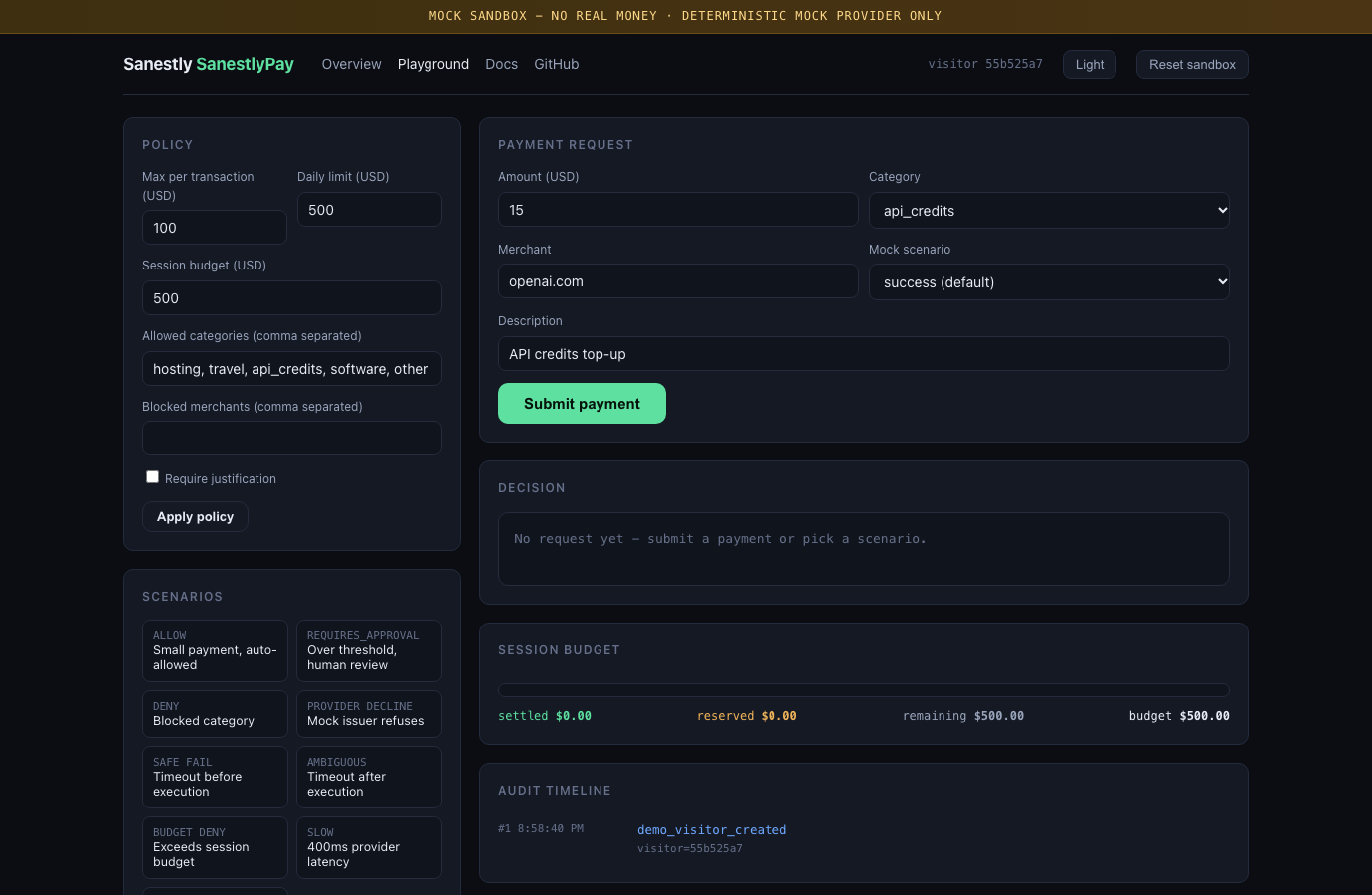
The Playground runs a full mock economy in your browser - agents, wallets, vendors, policies - no real card needed. You can watch an agent propose a purchase, hit a limit, request approval, and get signed receipts. Docs cover the API surface; the open-source SDK is on GitHub.