
A lighter alternative to YITH WooCommerce Wishlist
YITH Wishlist is the default answer to "add a wishlist to WooCommerce" - 900,000+ installs and a decade of features. It is also the plugin people leave when their store slows down or the feature set sprawls beyond what a wishlist should do.
This page is an honest comparison: when YITH is the right choice, and when a lighter plugin serves you better.
Where YITH Wishlist is strong
- Feature breadth - multiple lists per user, visibility controls, promotion prompts, Ask-for-a-quote integrations, dozens of appearance options.
- Ecosystem - integrates with other YITH plugins and is supported by most themes out of the box.
- Maturity - edge cases found by a decade of real stores.
If you genuinely use the advanced features - multi-list workflows, the premium promotional tools - switching makes no sense.
Where stores outgrow it
- Storefront weight - the full feature suite patches scripts and styles into product loops, cart, and checkout. On a fast store you can feel it.
- Guest handling - guest wishlists exist but as a secondary mode; the product was built account-first.
- Crawlable add-links - GET-based add-to-wishlist links get followed by crawlers and prefetchers, polluting data with phantom items.
- Option fatigue - dozens of settings pages when the actual requirement is "a heart button and a page with saved items".
What Lightweight Wishlist does differently
| YITH Wishlist | Lightweight Wishlist | |
|---|---|---|
| Guest wishlist | supported, account-first design | guest-first: save without account, merge on login |
| Mutations | GET links common | POST-only, namespaced - crawlers cannot add items |
| Storefront footprint | feature suite | one button + one page + My Account endpoint |
| Data | your DB | your DB, dedicated tables, no external service |
| Lists, alerts, promos | yes (premium) | no - deliberately |
Migrating without losing lists
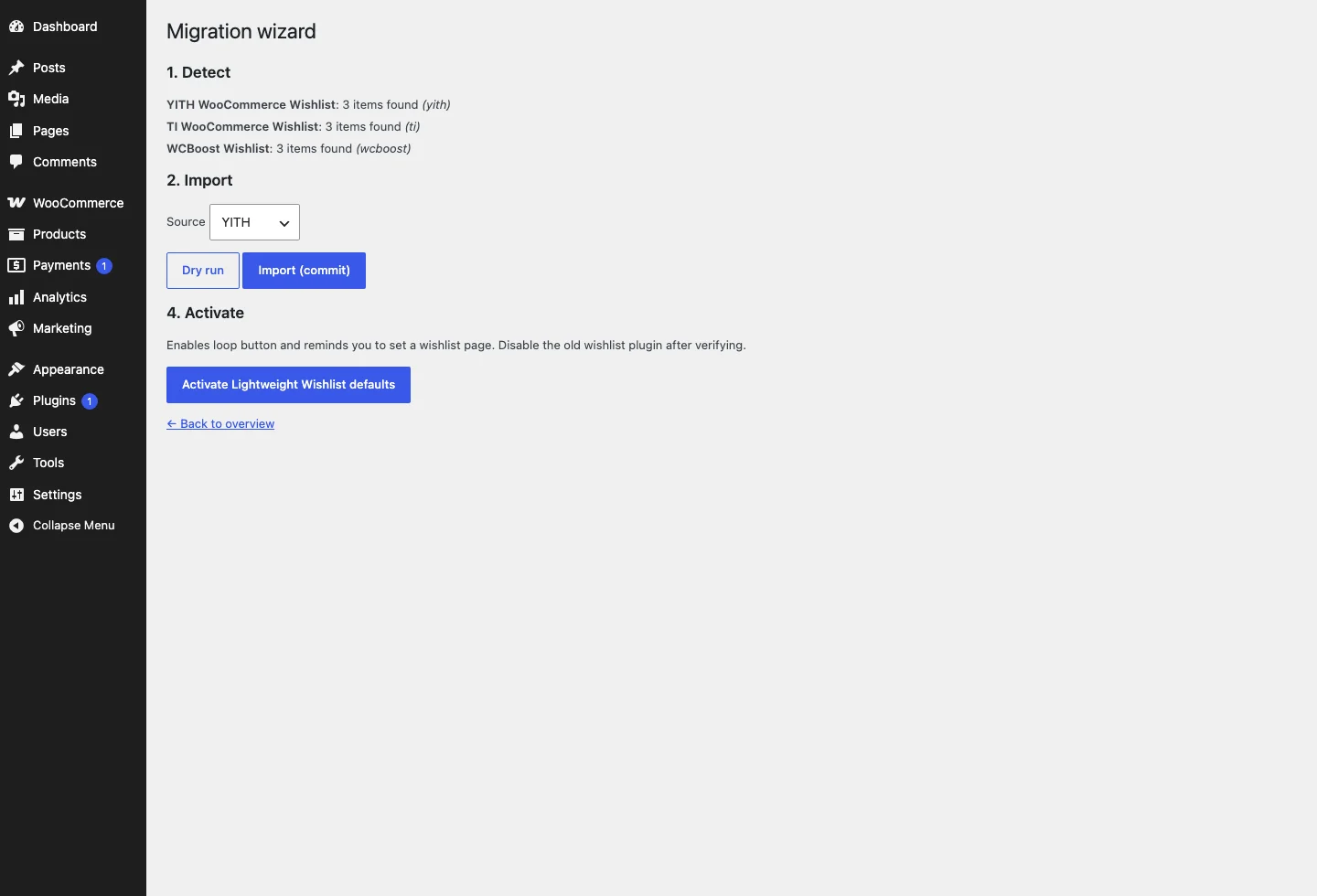
The reason people stay on a wishlist they dislike: customers' saved items are hostage. Our importer exists exactly for this:
- Install Lightweight Wishlist alongside YITH - they do not conflict.
- Run the import wizard in dry-run mode - it shows what would come over, item by item, before touching anything.
- Import - guest lists, user lists, saved dates are carried over; competitor tables are never dropped.
- Verify with the post-import comparison report, then deactivate YITH when you are satisfied.
If the report shows a mismatch, you can re-run or undo - the import is idempotent.
The honest answer
If you need multi-list sharing, promotional alerts, and deep YITH-ecosystem integration - stay on YITH. If your store needs "customers save products and come back to buy" with the smallest possible footprint and guests as first-class users - that is exactly what Lightweight Wishlist was built for, free on wordpress.org.